|
DDR-SDRAM
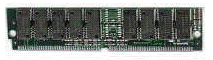
Ok, so we've all been wondering where the heck its been. DDR-SDRAM, the supposed next step for the memory industry, has proven itself...by actually showing up in the mainstream memory market. Although it has had a lot of press, anyone who has been involved with computers knows that this doesn't really mean anything, as vaporware has always been around. In any case, DDR-SDRAM is here, and its here to stay.
DDR-SDRAM has actually been on the market for some time, as it has been used in memory speed intensive things like graphics accelerators and whatnot. But now we actually get to see it used as the primary RAM in computers, so it is our duty as consumers to know the beef about this. Lets start from the top.
Double Data Rate Synchronous Dynamic Random Access Memory
Not only is Double Data Rate Synchronous Dynamic Random Access Memory a heck of a long name for something, its annoying to type. Now that we've established that, we can move on.
The Beef Traders
DDR-SDRAM and Rambus DRAM have been the two competitors for the memory of the future. Rambus DRAM was seen by most, myself included, as the future. This was caused by the continuing trend that when Intel speaks, everybody listens. Intel said that RDRAM was the future, and as such it was accepted as inevitable. However, RDRAM was DAMN expensive ( at the time of writing for a 64MB stick). It was to the point of people needing an RDRAM slush fund, right next to their Roth IRA, in case one needed to upgrade. A number of RDRAM chipsets were produced, primarily for high end servers and whatnot, due to the effectiveness of Rambus. Then we forgot about it. It currently only holds about 2.5% of the market for memory technologies this year, expected to only jump marginally in the next couple years.
DDR-SDRAM, on the other hand, is currently holding a 9% market share this year, expected to jump all the way to 20% next year, and estimated to be holding perhaps as high as 50% of all the memory shipped in 2002. This is caused by a number of fiscally interesting factors. Primarily, unlike RDRAM, this stuff doesn't force you to sell your grandmother's organs to buy some. Its price is comparable to that of the run-o-the-mill SDRAM available at your neighborhood tech kid's garage computer chop shop. Current prices show a difference of less than on the same size modules, which is impressive for new technology.
DDR-SDRAM won't just fit into your old motherboard, though. Newer motherboards need to have both the slots for it as well as BIOS support. However, here as well the cost of making the changes is marginal. At only - to make the upgrades, there is no real worries about getting a cheap motherboard that supports this (we aren't even going to compare to RDRAM motherboards). This makes for ease of implementation by you, your neighborhood techie, or the local major PC Manufacturer, like Dell or Gateway.
|